Uncategorized

Why did Pre-Colonial African Nations sign unfavourable treaties? Paper Shields Vs Proof of Residence

I, King (insert African Monarch) with the consent of my council, grant and transfer my entire rights to the country to (insert European Monarch or company) …
Just like that? Above is an excerpt of the treaty signed by Sultan Umar of the Sokoto Caliphate in 1885. We shall come back to it later.

One thing that strikes me as interesting in studying West African history is the similarities in the time arc of different civilisations especially the latter phases. You have these kingdoms that have been established in response to some adversity, have survived and evolved through conquest and trade and have become relatively stable powers.  Then comes a phase of increasing contact with European nations and just like a lot of new relationships, it’s nice at first, like a sweet honeymoon glow but it almost always ended in conflict.
These conflicts were usually preceded by an agreement of sorts – a treaty which spelled out the kind of relationship between the African and European nations involved.
I have read through a few of them and I’m shocked as to why anyone would agree to such unequal terms , even the famous  Lord Lugard who brokered  or enforced  several treaties on behalf of the British once said ”treaties were utter frauds , no man if he understood would sign it”.

As with most agreements, there are expectations from both sides , then there is the real intent buried in the fine print and sometimes it was quite plain to see.
Turns out that the matter was often a foregone conclusion, and the treaty was required as little more than ‘’evidence’’ by foreign powers in dealing with other foreign powers.

For some context, we’d look at it from both sides.

At the end of the 19th century Europe had already undergone significant societal transformations. There were new powers and new nation states had replaced the old feudalistic systems. Slave trade and slavery had been abolished and the industrial revolution was in full swing.
This was the height of exploration.  The African continent had always been known to Europe, but never really explored beyond the coast, mostly because they never needed to, and it was probably too dangerous for them to do so.
Goods and slaves would be transported to the coast for them by Africans (I’ll be doing a post on this soon – why Africans sold one another into slavery).  Moreover, tropical diseases especially malaria made the interior of Sub-Saharan Africa the ‘’white man’s grave ‘’.

This was soon to change from the 1850s when quinine began to be massed produced, meaning a freely available ‘’odeshi’’ for malaria could be accessed. At the same time, other non-human commodities began to see an increase in demand like palm oil and rubber.
Besides the allure of Africa’s considerable endowment with raw materials, European nations needed to access the African hinterland to secure legitimate trade and shipping routes, have annexes for military bases and have colonial territories to bargain with – as diplomatic chess pieces. There was also the issue of national pride – foreign territories were kind of the in thing those days. One had to look the part, after all.
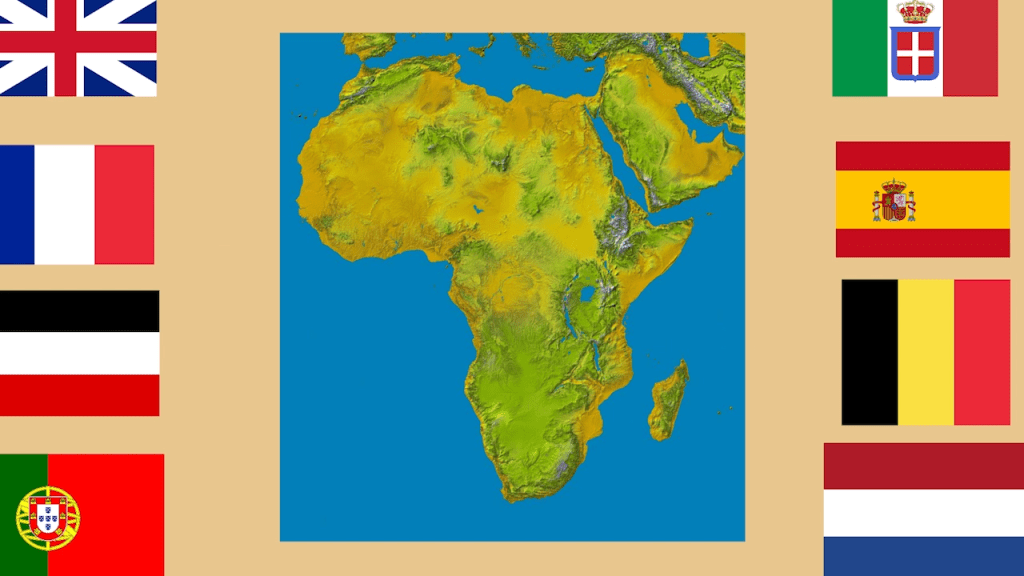

Thus, wealthy individuals, companies and countries were sponsoring exploration trips to the land of the sun to check out its vast and untapped potential.   Soon, what started out as a curious trickle beyond the coastlines escalated to an all-out scramble.

Now, the preceding centuries in Europe had seen a series of wars – War of Austrian succession, 7 years’ war (which started out as an overseas battle between colonies), the Napoleonic wars, and more recently the Franco- Prussian wars – to name a few.
Europe was war weary; war was bad for the economy and life in general. So, to avoid unnecessary conflict between the world powers over territories in Africa, 14 nations (Germany, France, Italy, Belgium, Britain, Denmark, Spain, USA, Russia, Portugal, Austria-Hungary, Sweden -Norway and the Ottoman Empire) all met in Berlin at a conference 1884 -1885.
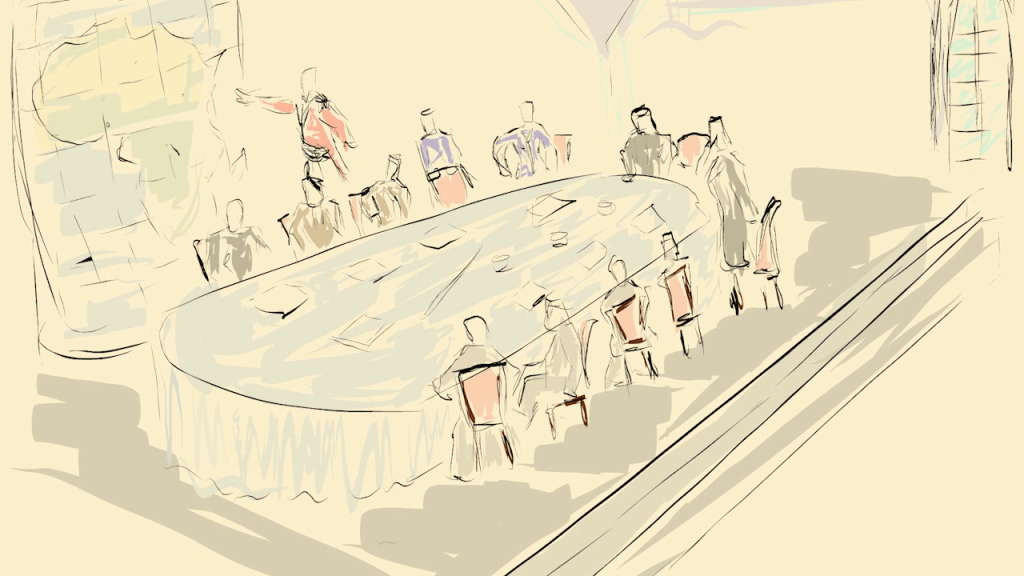
Here, they set up rules determining how to mark out their spheres of influence on the African continent. Basically, they made it impossible to claim any territory without actually having a presence there, one could not simply sit in Brussels for instance and claim land in say Gambia just because an explorer had mapped it out. Any power wanting to carve a piece of the African soil had to effectively occupy said territory. This meant they must have evidence of trade agreements or treaties of protection with the native kingdoms and have an administrative set up on ground like a consulate or residency office to govern the areas claimed and if necessary, by force.

So where does this leave the Native African kingdoms and what role did treaties play in all this? Well, treaties had been around way before the Berlin conference, but they began to truly ramp up in this period. The British via consuls or companies signed treaties with Asaba – 1884, Sokoto -1885 (revised in 1890), Opobo -1884, to name a few;  all offering protection and friendship in exchange for
– sole trade and correspondence with all Europeans to be conducted through them,
– oversight over foreigners in this region,
– protection of missionaries and all Europeans,
– Assisting British appointed consuls in discharging their duties
–  There was ceding of sovereignty in some cases
– and local rulers were often paid considerable pensions.

It seems foolhardy that any sovereign would be so short sighted as to surrender sovereignty for a yearly pension, but it is a bit more complex than that.

These treaties, they were often written in English (in the context of Nigeria) and though they had to be translated and explained, the translators often had to be tactical, towing a difficult line between a powerful foreign employer and a native King, often considered semi divine and definitely authoritarian. One translator confessed he did not understand that ceding sovereignty meant surrendering independence and that even if he did, he dared not mention it to his King as it was too outrageous.
The wordings were often very loose and fraught with traps.
In the treaty with Opobo for instance, a portion reads: ‘’Her majesty the queen etc, in compliance  with the request of the kings and people of Opobo hereby undertakes to extend to them (Opobo) and to territory under their authority and jurisdiction, her gracious  favours and protection’’ – On the condition that Opobo could not enter any correspondence, agreement, or treaty with any other foreign nation without the knowledge and sanction of Great Britain.
Jaja, king of Opobo smelled a rat and had to ask what was meant by protection. We all know how that story eventually ended (he was deposed an exiled when judged to obstruct free trade in contradiction to the terms and spirit of the Berlin agreement which no African nation was present at).

In the case of Sokoto, there were 2 different treaties and there was some confusion, especially with later Sultans, between the first and second treaties.

In the first, Umar, Sultan of Sokoto, with the consent of his council ‘’ grants and transfers to the National African Company LTD or their representatives, his entire rights of his country on both sides of the rivers Niger and Benue ‘’…further rights granted to the NAC included sole right among foreigners to trade, and the right to channel all foreign correspondences through them. Theses rights were irrevocable and signed to continue in perpetuity. In return, Sultan Umar was to get a yearly present to a value of 3000 cowries

The second treaty in 1890 secured to foreigners the protection of European government and the rights of the Royal Niger Company to exercise jurisdiction over Europeans and levying taxes. He further ratified the previous treaty from 1885.

As part of his explanation for such shocking terms, Sultan Umar acknowledged that to secure the wealth, prosperity and security of his realm, he had to trade with Europeans, and this would not be possible without securing the protection of Europeans in his domain to European governments. He needed arms with which to prosecute wars to secure the vast frontiers of the massive Sokoto empire as well as put down rebellions.
Moreover, news about the military prowess and conquests of Britain and France had been filtering in from India, Sudan, and Egypt for decades so he knew he had to tread with caution.
The confusion about the ‘’rights’’ granted from the 1885 treaty surfaced in 1900s when the British Lord Lugard declared a protectorate over the emirates of the Sokoto caliphate. The reigning Sultan at the time – Attahiru was livid, he had understood the yearly payments made to him to be that of a vassal paying an overlord rather that a pension paid in return for ceding sovereignty. So, he became hostile and the British called foul. In the conflict that followed, Sultan Attahiru was eventually defeated – watch his famous last stand in Burmi here.

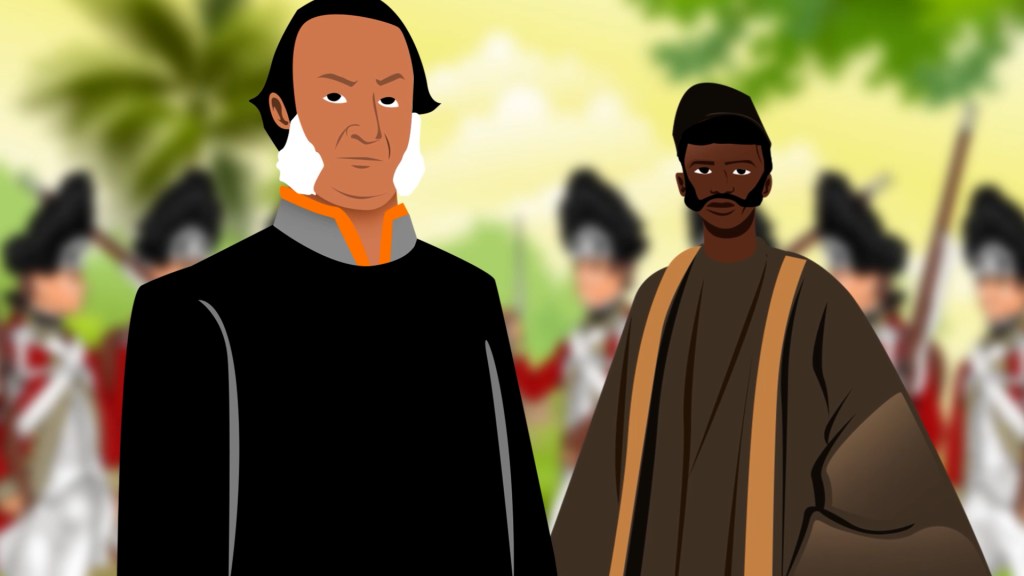
Even when the terms of treaties were fully understood, co -operation from African rulers was encouraged through inducements in the form of money, weapons and promise of protection from rivals and if that did not work, they were coerced into signing by military force or threat of one.
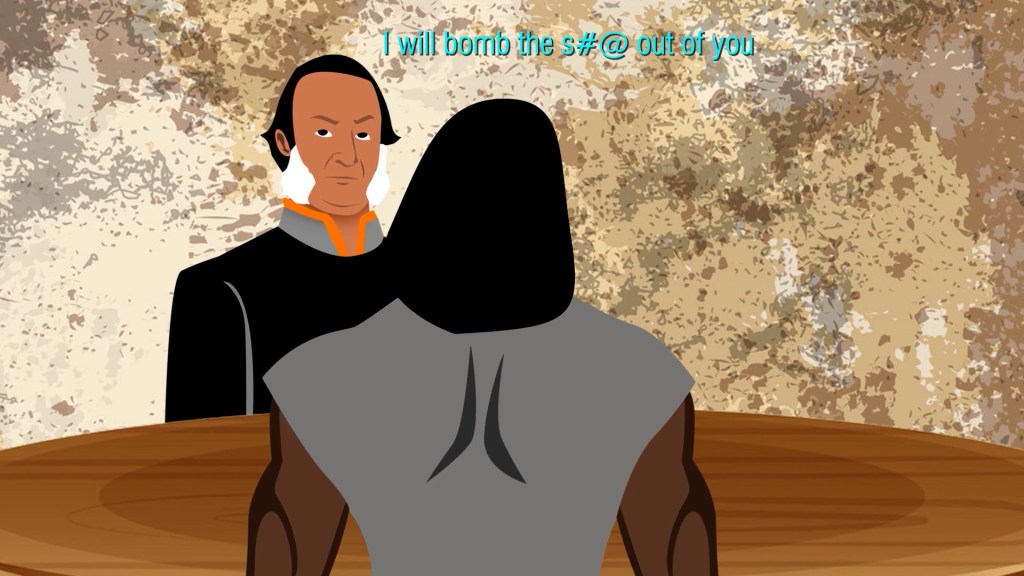

In Lagos in 1861, due to continued slave trading by certain factions in Lagos (Madam Tinubu and co), the British ‘’with some reluctance’’ decided on the full occupation, take over and administration of Lagos as a crown dependency.
King Dosunmu and his advisors were informed about this in June 1861, they initially declined, so the HMS Prometheus moved within gunshot of the city and the rulership of Lagos were informed that an answer was needed by 6th of August otherwise ‘’formal possession’’ of the town would commence.
Of course, they all remembered the battle of boiling canons from 10 years before where Britain and her Ships from The West African Squadron had backed one side of the Lagos royal family (Akitoye) in a civil war against Kosoko – it was a great spectacle.

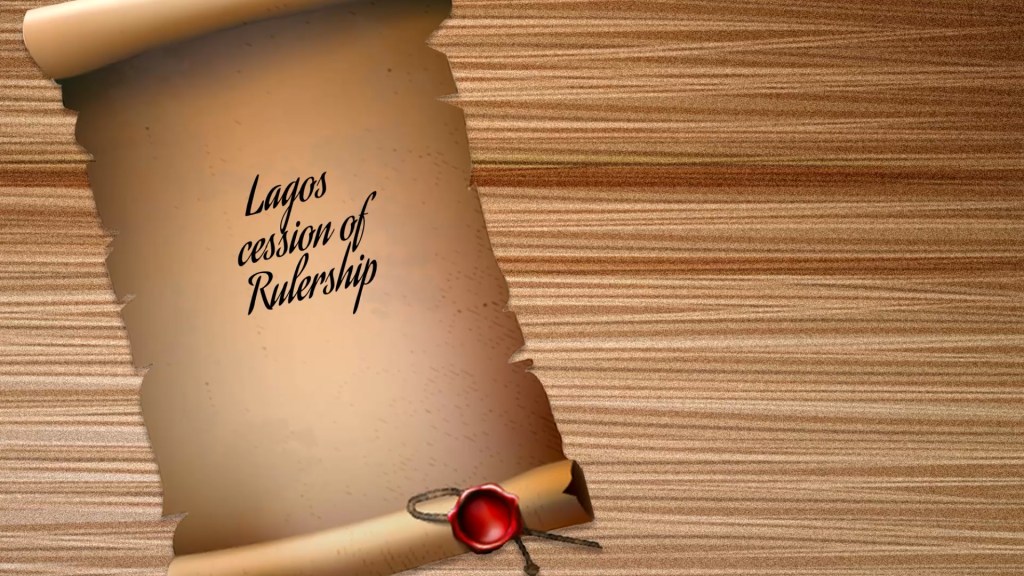
On the 6th of August 1861, King Dosunmu and 4 of the main chiefs of Lagos signed a treaty of cession in the British Consulate.  You can watch the battle of boiling cannons and the fallout of that here.

So African kingdoms signed these treaties for trade, for securing friendship with powerful foreign nations, for protection from other foreign nations and local rivals.
Some signed to retain some form of autonomy as Akitoye king of Lagos had done in 1851 whilst ousting a rival.
But most signed because the handwriting was clear. The result was inevitable anyways, the challenging powers were much to powerful to resist, might as well make the transition as bearable for everyone involved …and maybe secure some personal concessions for yourself and your family whilst at it.

For the European powers, it wasn’t that deep.  These treaties weren’t so much about protection as they were about control. Beyond constituting agreements between two sovereign nations, the real intent of any treaty was to stand as proof to other European powers that they had effectively occupied said lands. A proof of address or residence that could be tendered during negotiations with other European powers. That was the value , on their part , of the paper shield: it was a proof of occupation or intent thereof.

Standard
Precolonial history

TOP 5 PERSONAL RIVALRIES/VENDETTAS

Covered on Akwilani so far

So far at Akwilani, I have covered 2 series: The history of Sokoto and that of Lagos. Both have several themes which brought these stories to life. Today, I thought we might explore the top personal vendettas in the history covered till date.

And why not, if you know anything about Nigerians, we love the concept of enmity. It cannot be avoided, some of us laugh out loud from our sleep whilst having dreams of throttling our bosses’ necks, and If you’ve ever driven in Lagos, every vehicle on the road has a potential archenemy behind the wheel. In fact, there’s at least one enemy responsible for every problem and some need daily casting and binding.

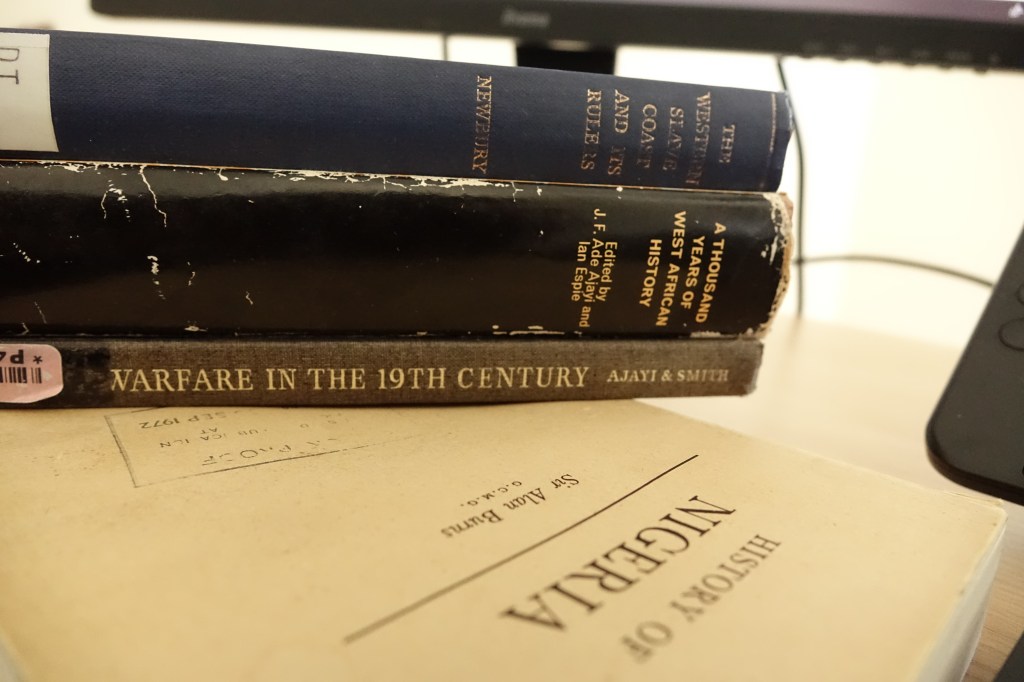
These historical personal vendettas ran quite deep. The hatred was raw and intense, it stung my eyes as I read through them, and the pages of the reference books were scorched and covered in soot (ok that’s a lie but you get the general picture). Funny enough, at the core of these rivalries are  simple concepts everyone can relate to today.

Note of warning, if you haven’t watched the videos on the Akwilani channel (on the history of Sokoto caliphate and the history of Lagos), this post is going to be riddled with spoilers.


Kosoko Vs Eletu circa 1840s
(Woman palaver is ageless!)

For a bit of context, the kingdom of Eko (Lagos) had dramatically expanded and became a regional superpower in West Africa. Lagos was ruled by a dynasty that derived from the Kings of Bini since 1603 and their ascension and power was guaranteed by power chief of whom the Eletu was the most senior.

Kosoko was one of the younger princes of Lagos was due to succeed his recently deceased brother, but the Eletu stepped in at a crucial step to prevent this and had Kosoko’s uncle in exile installed as king instead. The enmity between them was not out of the blue , Kosoko had bedded a young damsel betrothed to the Eletu years before and to say the Eletu was pained is a bit of an understatement .

It didn’t end there though, the Eletu further rubbed salt in Kosoko’s wound by accusing his sister of witchcraft and having her drowned and for a final flourish , after Kosoko was banished to Ouida, the Eletu dug up Kosoko’s mother’s remains and cast the disinterred bone into the Lagos Lagoon. Savage.

Kosoko would have the last laugh. In the wars that broke out, the Eletu would be captured by Kosoko’s men. He would be bound in an empty palm oil barrel which was set on fire and the eventually thrown into the Lagos Lagoon.

I think It’s safe to say these guys loathed one another very much.  Love is wicked.

Watch the savage rivalry play out in this video


Uthman Dan Fodio Vs Yunfa Circa 1803
(That one Teacher you hate)

The Sokoto Caliphate was one of the largest empires ever to exist in Sub Saharan Africa.  Its founder and most revered leader, the first Sultan of Sokoto was none other than the erudite Uthman Dan Fodio.   Long before the Caliphate came into being, the area now known as northern Nigeria was made up of Hausa City states ruled by Sarkins. There was widescale suffering from over taxation and endless wars.

So, Uthman born 1754 began preaching against the pervasive injustices in his 20s and before long came into the service of one of the powerful Sarkins. Uthman became the tutor for the Sarkin’s heir – Yunfa. Now, I’m not sure how the lessons went but when Yunfa came of age and became a Sarkin himself, there was serious tension between him and Uthman.

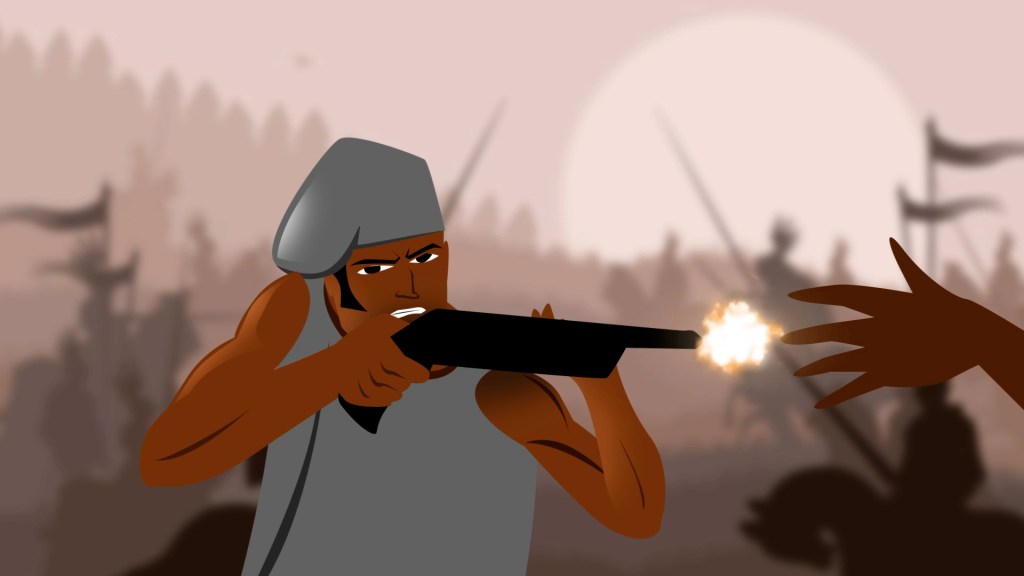
Perhaps Uthman’s amassing thousands of followers who began to stockpile arms had something to do with it.  Anyways, Yunfa attacked Uthman’s allies and tried to sell them into slavery and of course Uthman’s men intervened militarily to set hem free. Therefore, Yunfa did the only thing a right-thinking monarch would do, he invited Uthman for a ‘’meeting’’ and shot at him point blank with a pistol – the gun misfired, and he received mixed thickness burns to his hands for his efforts. Uthman fled, not just the scene but the kingdom with all his men.

This of course touched off a civil war (I mean the man shot at his teacher!) which quickly escalated into a region-wide conflict which Uthman won and Yunfa was killed in the epic final battle. Schooled!


Adele Vs Oshinloku and Idewu Ojulari Circa 1820s to 1830s
(Intergenerational Beef)

From the late 18th century, Lagos had enriched itself on the trade in enslaved people and there was an ongoing tussle in the royal family for the control of this wealth.

Adele and Oshinloku were half brothers and royal princes. Upon the death of their father Ologun, Adele, the younger son bribed his way to the throne and was installed as king. Oshinloku as a typical first-born wasn’t going to stand idle while Adele ate the bigger piece of chicken so – war. Oshinloku lost (gbas) but he regrouped and was able to defeat Adele in the rematch (gbos).

Adele fled to Badagry, set up shop there and became a threat (gbas). Oshinloku did not like this, so he left his house to finish him off once and for all. The battle in Badagry lasted 3 days bit Adele won with the help of his general Bombanee (gbos).  So, a stalemate ensues…

But stalemates are boring, so Oshinloku caught a small case of death, and his son Idewu Ojulari became king in his stead. Smelling blood, Adele went on the offensive and dragged his army from Badagry all the way to Lagos only to be handed the beating of his life by the young king Idewu. (Gbas).  It was completely humiliating. For some context, Adele’s general Bombanee was captured, and his fate was grim. His right hand was pulled from his body, like a twig and his left hand nailed to his head. He was marched around like this before being beheaded.  Overkill!


Akitoye Vs Kosoko circa 1845 -1853
(You can’t always be too nice)


King Idewu Ojulari, who had just taught his uncle Adele a lesson in war was flush with victory but was forced to commit suicide soon after (watch the video to find out more). Anyways, Kosoko was set to succeed his brother, but the Eletu as seen above intervened.

Adele was made king and after him, his son Oluwole and after him, Akitoye – Kosoko’s uncle was made king.  So, he had been side-lined 3 times for a throne that traditionally should have been his so you might understand why he was a little bit frustrated. Add to the fact that the prime minister the Eletu was severely antagonising him even whilst he was in exile in Ouida.

So, Akitoye felt a bit sorry for his nephew and invited him back to Lagos (bad idea) . Kosoko soon built up a massive following and tensions rose quite quickly. It degenerated to an insult slinging fest sung through the city by their respective town criers and thereafter war.

The conflict was really bitter. Half of Lagos burned, and thousands were killed.  Akitoye lost ground very quickly and retreated to the palace where he and his men ran out of supplies and fresh water and had to drink the brackish water of the Lagoon. They were spared certain death only due to the leniency of Kosoko’s general Oshodi Tapa.

Akitoye would eventually take his throne back but only with British help and a massive artillery battle along the shore of Lagos which lasted 3 days.

Got to stay guarded always. Ijaw a, Ija osi , always guiding.


Honourable mentions

Uthman Danfodio Vs Elkanemi Circa early 1800s
This was more of an intellectual rivalry than anything else. Both were scholars and leaders of Muslim states, like same team, right? Well wrong.

. Uthman’s Sokoto Caliphate was expanding at astonishing speed and overshadowed the pale and moribund Borno empire, led by El Kanemi.  Uthman’s aims were for complete conquest but Elkanemi was able to rally and resist. The two men exchanged letters where Elkanemi attacked the legitimacy of Uthman’s jihad into Borno being a fellow Muslim state and all. Uthman’s response was along the lines of you guys aren’t really Muslims as your practices are tainted.  Maybe it was about more than just religion?


Sultan Attahiru I Vs Lord Lugard Circa 1903
N
ot that personal but they certainly didn’t like each other.  Lugard in carrying out the British mandate in the Niger area, deposed some of the Sultans Emirs for slave trading and replaced them without consent. He thereafter sent a message with a thinly veiled threat to the Sultan (he wanted co-operation, but Britain has overcome similar empires to his all over the world)

The Sultan Attahiru was livid, his reply: Tell the infidel that we did not invite him to interfere with our problems. He has his religion and we have ours, the only relationship that can exist between a believer and an infidel is…war


. There’s loads more, between Madam Tinubu and British Consul Campbell and so on


Enemies everywhere, can you really say you’ve made it in life if you haven’t acquired a few good enemies along the way?
Thanks for reading my piece and I hope to see you more often on this blog and on YouTube as well, and as friends too, not enemies.

Standard
Uncategorized

Why Akwilani?

Hello again and welcome to my blog – ( that felt sooo weird to write !).

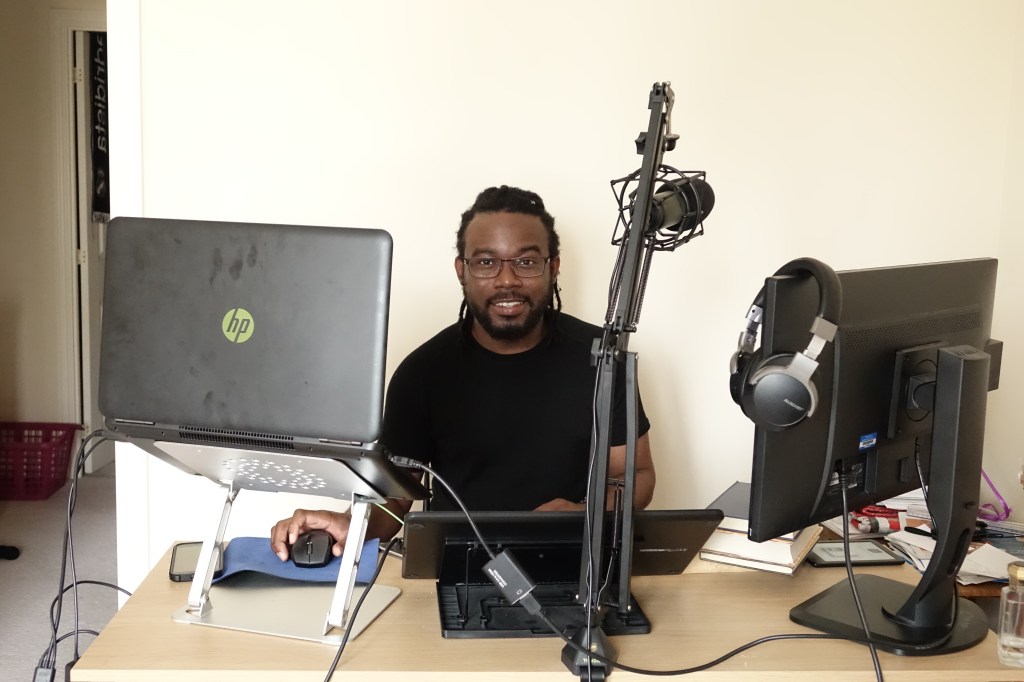
Right then , straight to addressing all the elephants in the room. I’m neither a writer nor historian, what I am is a rather chilled, slightly nerdy young chap with a niche interest that I hope you like as well.

I find history very intriguing . For me it’s like looking up at the stars at night . Each little dot of light represents an entire story , each one a focus in itself and all of them linked by the fabric of space and time. Some of them are even extinct but their light travels on , each twinkle a reminder a similar future – from the past.

So history is not just the trail left by the passing of time but a record and evidence of it -and as time is non linear , our history could very well be our future.

Over the years, not a lot of time/attention has been paid to African history even though it is very much a part of World history. For various reasons it was ignored , relegated and even suppressed with the result that many Africans (I’m Nigerian) know little of the rich stories of her peoples prior to contact with Europeans. So I know more about Operation Barbarossa (WW2) than I do of Operation Tail Wind ( Biafran war) for instance.

I have decided to do somthing about that with Akwilani by joining the growing throng of creators out there, presenting African history one bit at a time. I’ll be putting out regular content on the Akwilani YouTube channel , blogging here and maybe even podcasts.

From the Akwilani YouTube Channel

Why the name Akwilani? Unfortunately , its not that deep . I’ve gone with it primarily because I like the sound of it but its origins come from way back when I was a student at the University Of Lagos. One of my very good friends, Mo used to tease me by calling me Aquilani (Aquilani played for Roma and was instrumental in knocking out Real Madrid ,whom I support , from the champions league – I think the year was 2009?). Anyways, I secretly liked it , plus it helps that it means eagle which is a good thing , I guess.

So thats my name, insignia, mission and passion.
I’m Tayo ”Akwilani” Bastos and I look forward to this epic journey of looking back with you.

Standard